2024 · Undergraduate
 Central University of TechnologyDiploma
Faculty of Engineering, Built Environment and Information Technology
Diploma in Computer networking develops knowledge and practical capability in the core knowledge, methods and professional practices of the chosen field. Students build analytical, communication and problem-solving skills through theory and applied learning. Exact modules and practical components vary by institution and study year.
Foundational theory; discipline-specific knowledge; communication; research and information skills; applied problem-solving; and practical or project work where included by the institution. Module names and sequencing must be confirmed in the institution's current curriculum.
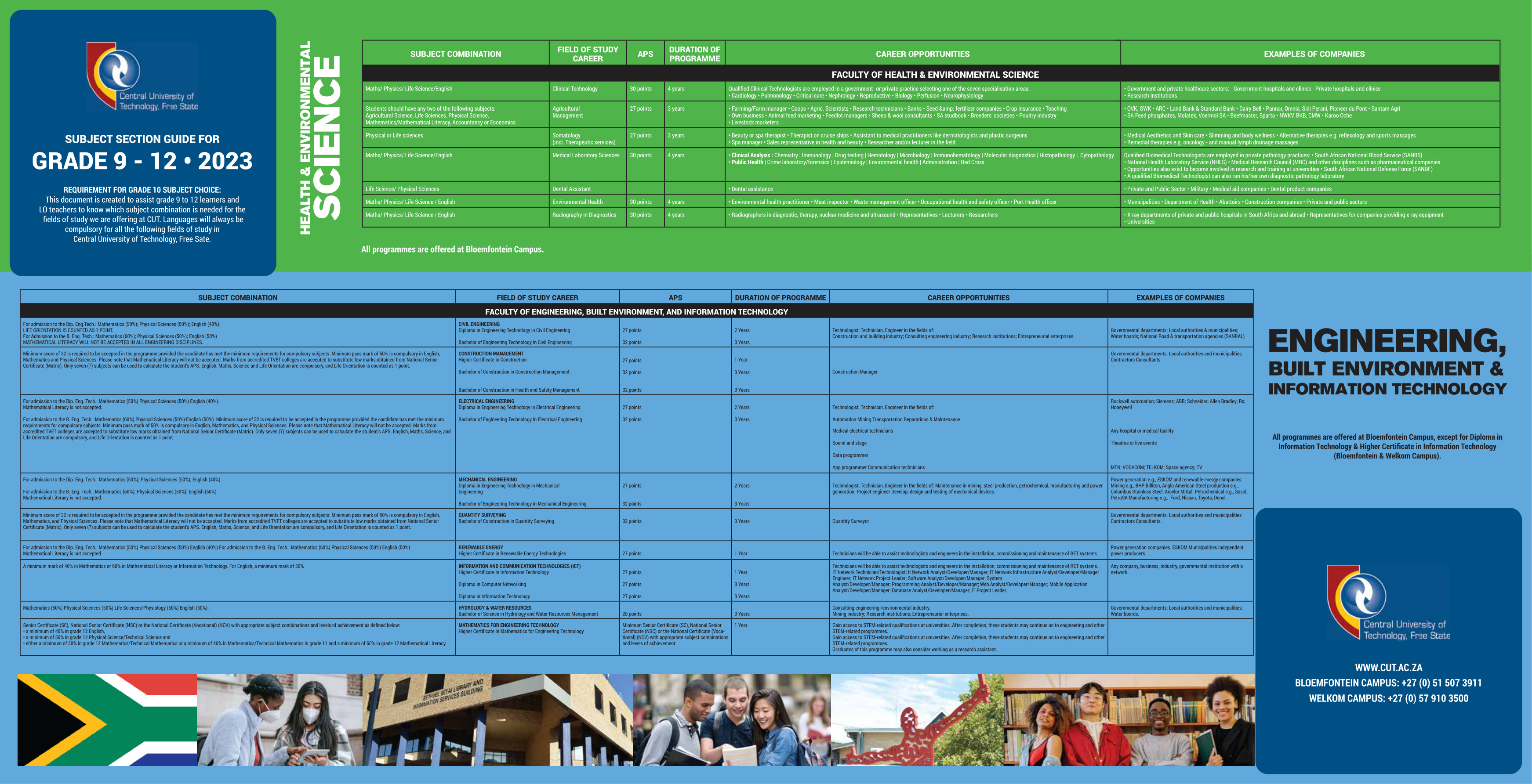
For candidates who matriculated in 2007 or before: In addition to the general admission requirements, a minimum mark of 60% on Standard Grade or 40% on Higher Grade in Mathematics or Computer Studies is required. For candidates who completed
the NSC in 2008 and thereafter: In addition to the general admission requirements, a minimum mark of 60% in Mathematics Literacy or 40% in either Mathematics or Information Technology is required. Career Opportunities The world is increasingly
becoming a global village, with Information and Communication Technologies (ICTs) playing a fundamental role in our day-to-day lives. South Africa, like other countries, realises that ICTs can indeed bring about positive change in its
socio-economic development. CUT’s contribution to this national agenda is realised through diploma, BTech and MTech programmes offered in the Department of IT. Through these programmes, the university contributes to the ever-increasing demand
for a wide range of highly skilled information technology professionals in fields such as web applications, communication networks and software development. The department is particularly unique in the country, as it offers courses in mobile
programming and games development. The department has state-of-the-art Cisco equipment through which students get hands-on experience in computer networking, which provides opportunities for various professional certification pathways. Our
graduates will be able to take up jobs in: Systems analysis: System developers, application designers, business analysts, information analysts, management information analysts, system analysts. Computer networking: Computer network
administrators and technical assistants. Database development and management: Business database analysts, database administrators, database managers. Project management : Information Systems (IS) project leaders. Read the IT - Communication
Graduates may progress to doctoral study in a related field, subject to research alignment and the receiving institution's admission requirements. A related advanced diploma, postgraduate diploma, honours degree or other higher qualification, depending on the completed qualification and the receiving institution's admission rules.
Entry-level professional, technical, administrative or research-support roles related to the qualification. Some occupations require professional registration or further study.
Open a campus to view its map, directions and other linked courses.
Open a prospectus in EduCoast’s internal viewer. Downloads require sign-in.